 Nano
NanoDefense Pro Ingredients: A Closer Look at All Six Active Ingredients
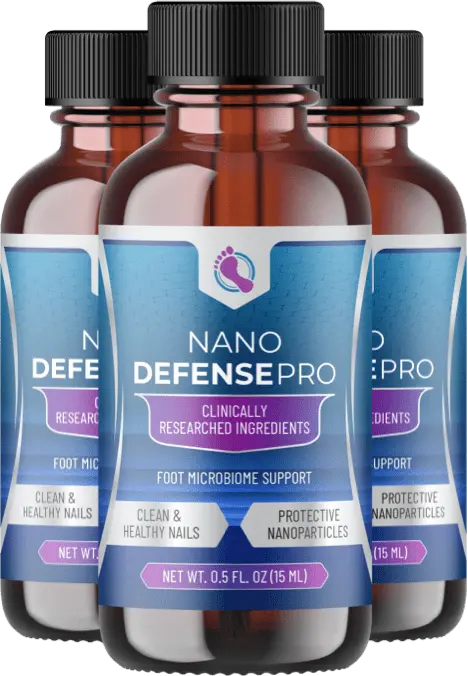
NanoDefense Pro lists six named ingredients directly on its label — no vague "proprietary blend" hiding what's inside. This article walks through each one, in the same order they appear on the bottle, so you know exactly what you'd be applying.
1. Nano-Silver
Silver-based ingredients have a long history in external-use products, and have been studied for various applications involving microorganisms and material surfaces. In NanoDefense Pro, it's presented in nanoscale form — the "nano" prefix refers to particle size, not an automatic claim of stronger performance.
2. Nano-Curcumin
Curcumin is the compound most associated with turmeric, and it's been examined across a wide range of scientific contexts. Nano-curcumin specifically refers to a nanoscale preparation of that compound — different preparations can behave differently, so research on one formulation doesn't automatically transfer to another.
3. Nano-Quercetin
Quercetin is a flavonoid naturally found in onions, apples, and a number of other plant foods. Like curcumin, it's been studied broadly, though evidence about an isolated compound doesn't necessarily prove what a finished topical liquid will do.
4. Luteolin
Luteolin is another naturally occurring flavonoid, found across a variety of plants. It's been looked at in laboratory research, though lab findings don't automatically translate into guaranteed benefits from applying a specific product to human skin.
5. Deoxyribonuclease (DNase)
This is the one ingredient on the list that isn't a plant compound — it's an enzyme, commonly abbreviated DNase, that acts on DNA. Its behavior depends heavily on the specific preparation and formulation used, which is part of why NanoDefense Pro frames its full ingredient list as a combined formula rather than any single "hero" ingredient.
6. Cape Aloe
Cape Aloe is a botanical ingredient from the aloe family. Aloe-derived ingredients show up across many personal care products, though preparations vary — which is why checking the specific labeling matters if you have a known aloe sensitivity.
Want the full breakdown with serving details and formula summary?
Visit the Full NanoDefense Pro Ingredients PageHow the Six Ingredients Fit Together
None of these six ingredients is marketed as a standalone solution. NanoDefense Pro presents them as a single combined formula, applied together in one liquid application rather than as separate steps. For more on how that combination is intended to work day to day, see our article on how NanoDefense Pro works.
A Note on Reading Ingredient Lists
An ingredient list is a useful starting point, but it's only one part of the decision. Amount, formulation quality, and the finished product's own testing all matter too — none of which can be judged from a names-only list. If you have sensitive skin or known allergies, review the complete physical label and consider professional advice before trying something new, as covered on our reviews page.
Frequently Asked Questions
Are these ingredients safe for sensitive skin?
Suitability varies by individual. Patch-test guidance and label warnings should always take priority, and anyone with known sensitivities should check with a healthcare professional first.
Is "nano" just a marketing term?
Not exactly — it refers to particle size. But smaller particle size alone isn't proof of better performance or safety; it's one formulation characteristic among several.
Where can I see the full, current ingredient list?
Always check the physical label on the bottle you receive, since formulas can be updated by the manufacturer over time.
Continue reading: NanoDefense Pro Benefits · How NanoDefense Pro Works · Official Info Page
Keep Exploring NanoDefense Pro
Main pages: Home · Official Info · Reviews · Ingredients